Creating the moments I loved as a kid, for the players of today.
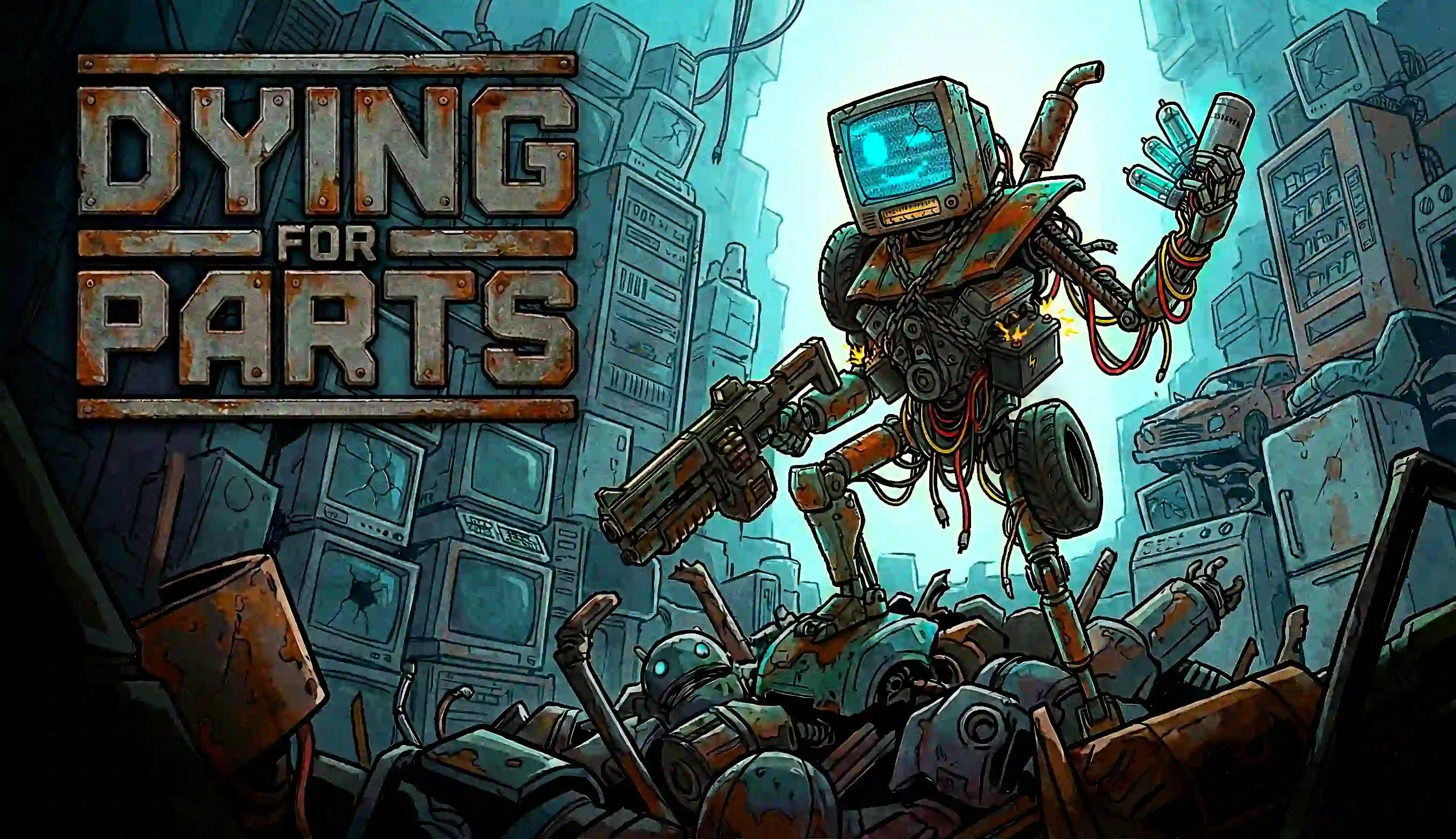
Dying for Parts is being made in Unreal Engine 5.6 with Blueprints and C++. It is a fast-paced FPS experience where every decision matters. Scavenge parts from fallen enemies and customize your loadout each run with a dynamic upgrade system. Movement is your greatest weapon with wall running, grapples, slides, and countless more momentum-based movements.
Test your skills in a mobile hardcore physics platformer and explore more games and their code on GitHub!

Hi, I'm Tai! I'm a Computer Science student at CU Boulder. I've always loved playing games like Deadlock, Overwatch, Subnautica, and Minecraft, which led me to create my own games, like TerraBlitz and Dying for Parts. When I'm not gaming or coding, you can usually find me at the gym, flying drones, or editing videos. My journey into tech started in high school when I fell in love with coding, since then I've applied this passion in professional software engineering/data science roles at companies like SMX and HandelStats. For a detailed look at my journey and projects, my resume and github are linked below.
Unreal Engine
A handful of smaller apps I made. "Red Button Clicker" (released on Google Play), a 3D layout productivity-focused Task Manager, and two 3D action prototypes: an infinite runner and a base defense shooter. These projects served as an intro for Unreal Engine for me and maybe someday I will revisit them…
Python · BeautifulSoup4 · Pandas · NLP
This comprehensive data extraction framework automates the analysis of websites to harvest performance metrics, technology stacks, and contact information using libraries like BeautifulSoup4 and Pandas. The tool features a modular architecture capable of batch-processing large datasets to generate detailed reports on page load times, SEO metadata, and site architecture. By integrating NLP for content summarization and Wappalyzer for tech detection, it transforms raw web data into structured, actionable business summaries.
Python (Flask) · JavaScript (Kaboom.js) · 24-Hour Hackathon
Developed during the 24-hour HackCU hackathon, this interactive web application features an escape room experience comprised of eight distinct mini-games built with Python (Flask) and JavaScript (Kaboom.js). I architected the backend system to handle dynamic routing and session management. The project demonstrates the ability to execute rapid full-stack development, successfully integrating complex physics-based game logic and state persistence under tight time constraints.
Python · Pygame · Threading · ANSI Terminal
This collection showcases versatility in Python programming through two games: a high-performance terminal Galactica and a Pygame GUI Tic-Tac-Toe. Galactica pushes the limits of standard libraries by utilizing six concurrent threads to handle real-time ANSI terminal rendering and collision detection without an external game engine. Tic-Tac-Toe leverages Pygame to demonstrate clean event loop architecture and robust win-condition algorithms.
Python · Webots · Lidar · Inverse Kinematics
This robot was made in Webots using Python. It uses Lidar and ground sensors for precise navigation and maps in real-time. It avoids obstacles using sensor data and real time scanned LiDAR map. It has an inverse kinematic control system for a robotic arm for user control to grasp, and transport objects within the mapped environment.
RISC-V · Codasip C · Pipeline Architecture
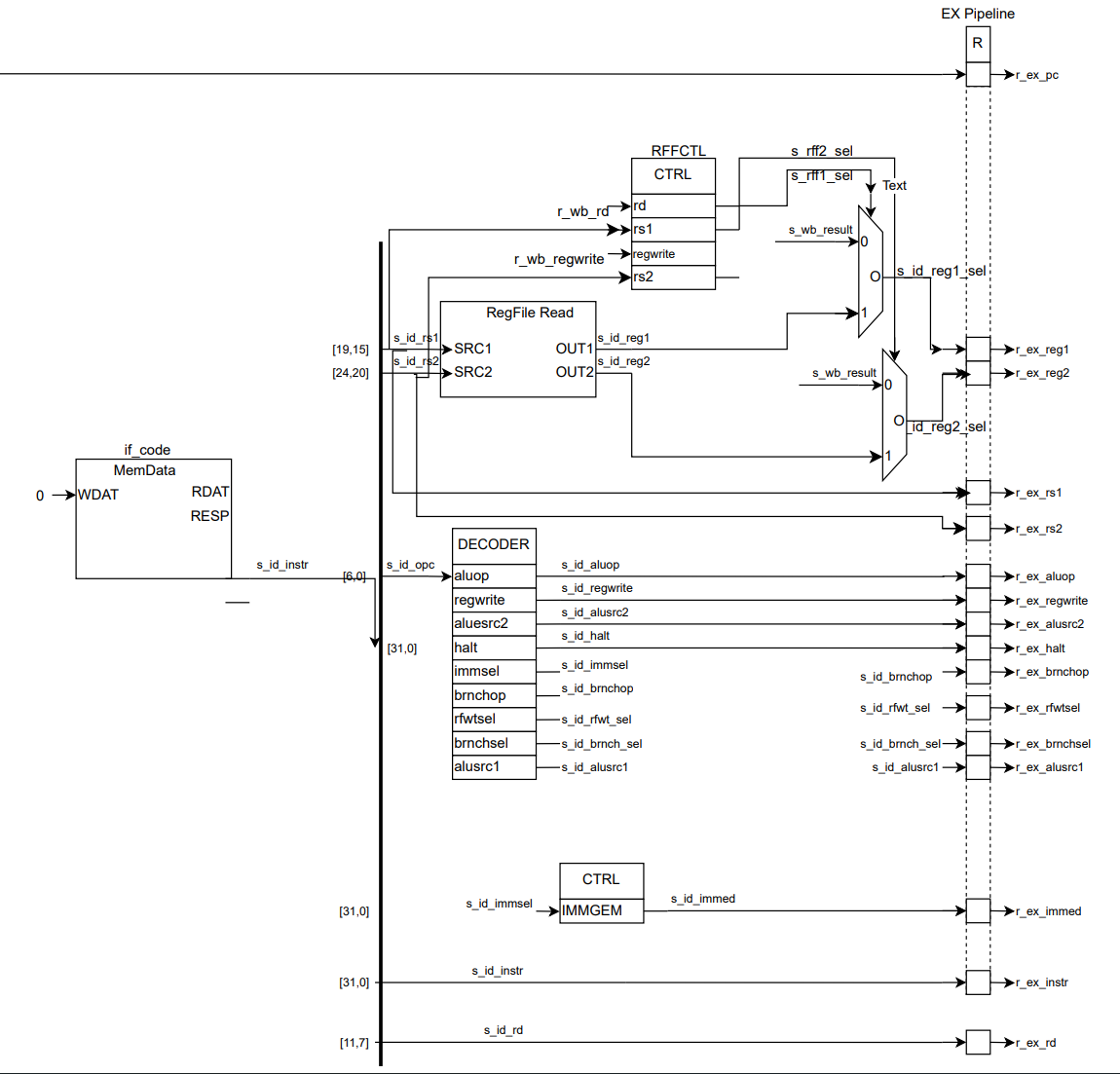
Designed and implemented a fully functional 5-stage pipelined RISC-V processor using pipeline diagrams and Codasip C. The architecture features advanced hazard mitigation strategies, including a dedicated forwarding unit and stall logic to resolve data dependencies in pipelining as well as branch prediction.
Check out some stunning drone and camera footage all filmed and edited by me!